http://www.vogue.co.uk/news/2014/1/couture-dreams
Wednesday, April 9, 2014
Thursday, September 19, 2013
GUCCI NEWEST SHORT MOVIE BAMBOO CONFIDENTIAL
http://senatus.net/album/view/11052/

In Gucci's new short movie the leading role players are the Bamboo Shopper and Lady Lock Bag. With gusto they are the lead and you're guaranteed for some tasty looking good movie at least for a minute or some.
This historic hotel Guccio Gucci (founder) worked early 1900s as a lift-boy and was so violent inspired by the new traveling elite. There, in the elevator, the idea arose to ever launch's his own leather goods label. The rest of the history can guess.
http://senatus.net/album/view/11052/

In Gucci's new short movie the leading role players are the Bamboo Shopper and Lady Lock Bag. With gusto they are the lead and you're guaranteed for some tasty looking good movie at least for a minute or some.
For Gucci's latest campaign around the autumn sweethearts of their bag collection transformed the London's Savoy into a movie set
Sunday, September 15, 2013
Karl Lagerfeld mini horror movie Fendi’s 2013 Fall/Winter ‘INVITO PERICOLOSO’
I'm a graduated Audio Visual communication designer, was my approach to visualize moving images within sequence in timing related to fashion and to trend forecasting. Starting back in 1995 when I created Audio visual presentations for trend/ forecasting assignments. It's inspiring and motivating to see the development and approaches on very high level in fashion nowadays!
http://www.style.com/stylefile/2013/09/exclusive-cara-and-saskia-star-in-invito-pericoloso-by-karl-lagerfeld-for-fendi/
More and more short movies are directed, created and linked to fashion designers, show/ ready to wear collections. As Cartier took it almost 5 years to launch there advertising campaign as a film directory approach. As Gareth Pugh started to show his collection as first initiator on a big videoscreen. As I've posted earlier about Cartier launched it's advertisement campaign as a movie, Burberry new media design, e. o.
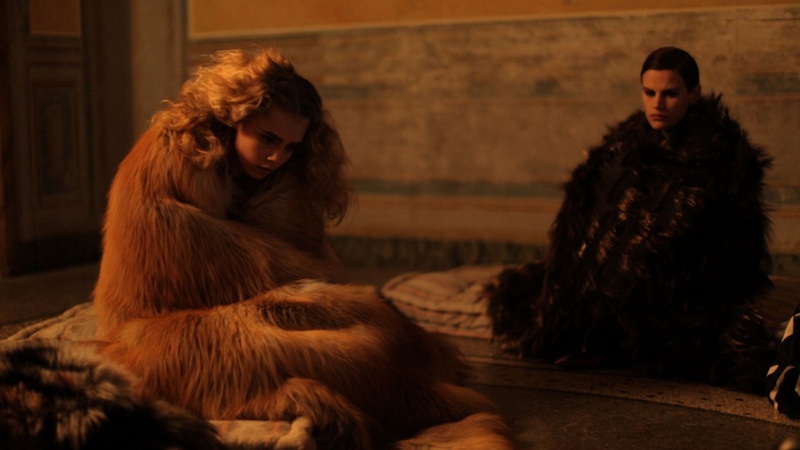
Karl Lagerfeld, multitalented and gifted fashion designer, photographer and now as director for Fendi's 2013 fall collection. Entitled INVITO PERICOLOSO, “Perilous Invitation”, the artsy retro-inspired horror film sees Cara Delevingne alongside Saskia de Brauw – each showcasing the Italian fashion label’s fur-centric Fall/Winter 2013 collection.
I'm a graduated Audio Visual communication designer, was my approach to visualize moving images within sequence in timing related to fashion and to trend forecasting. Starting back in 1995 when I created Audio visual presentations for trend/ forecasting assignments. It's inspiring and motivating to see the development and approaches on very high level in fashion nowadays!
http://www.style.com/stylefile/2013/09/exclusive-cara-and-saskia-star-in-invito-pericoloso-by-karl-lagerfeld-for-fendi/
Friday, September 6, 2013
SAINT LAURENT AW13 Show DANCE
YVES SAINT LAURENT AW13 Show DANCE 02
http://www.dazeddigital.com/fashion/article/17015/1/exclusive-hedi-slimanes-first-film-for-saint-laurent
Today as we premiere his first film for Saint Laurent, which focuses on the new Ballerina line, he once again re-contextualises the history of the house and imbues it with a new energy. Against a haunting ‘Trick or Treat’ soundtrack, composed and performed by LA-based Clementine Creevy from Cherry Glazeer, model Lida Fox – who also walked in the AW13 show and is considered one of the "mannequin cabine" from the house Yves Saint Laurent – is captured in motion wearing Slimane’s newly designed classic ballerina shoe.
Thursday, April 11, 2013
MARILYN MANSON NEW FACE FOR SAINT LAURENT CAMPAIGN
Ok I have to admit, I was a huge Marilyn Manson fan...during his Antichrist Superstar album, Mechanical Animal and Holywood albums... Though Holywood was already the beginning of the end... After John 5 and later Twiggy left the band, it was definitely over for me.
Brian Warner represent himself as his Alter Ego Marilyn Manson, I
really found him stunningly beautiful. Everything besides scary or alienated
freak...
When I went to his concerts, different countries.
Wearing high fashion. Versace black stilletto booties, which had a
small gold detail at the back of the heel. Matching so well with the gold
chain/ necklace top which costed me a shitload, to considering it didn't even
had a backside.....
Together with a black pair of Costume National Trousers and
leather gloves, just covering my fingers and half my hand. .....Mi
overdressed Marilyn Manson 'fan', surrounded by the most pathetic (no
offense) tragic look a likes.
I even bought myself some bloodred contactlenses, because M.M wore
1of these. It was at the same time that Alexander McQueen showed his collection
and the catwalk models they all wore bloodred contactlenses... So I had to had
these myself (special prescription because I'm short sighted -4)
How fascinating it is now to read the news that Hedi Slimane has
chosen Marilyn Manson to be the face for (Yves) Saint Laurent.
A few years ago he and his, by that time fiancee Dita von Teese,
were already doing the advertising campaign for Vivienne Westwood.
So I love it; M.M. for YSL, a small part of mi will be a 'fan'
again of MM this time from my biggest interest& perspective fashion
related... A new approach Fashion / pop icons....
Sunday, November 25, 2012
Nina Ricci winter2012/2013
This video made by Inez van Lamsweerde and Vinoodh Matadin is so beautiful realistic yet so surreal in HD is exquisite to watch.
Sound and music distorted backwards. And by using real time animation. It's done beautifully!
Not to mention what a progressive and modern approach for such a classic, traditional Haute Couture house as Nina Ricci. Well it all started to be progressive already when Oliver Theyksens came as head designer for Nina Ricci.
http://vimeo.com/50306628
This video made by Inez van Lamsweerde and Vinoodh Matadin is so beautiful realistic yet so surreal in HD is exquisite to watch.
Sound and music distorted backwards. And by using real time animation. It's done beautifully!
Not to mention what a progressive and modern approach for such a classic, traditional Haute Couture house as Nina Ricci. Well it all started to be progressive already when Oliver Theyksens came as head designer for Nina Ricci.
http://vimeo.com/50306628
Friday, November 9, 2012
LOUIS VUITTON TO EXPAND INTO STATIONARY, TO OPEN A STATIONERY BOUTIQUE
As a true believer of written notes, to keep my personal
information data-preserved. I’m definitely willing but I gave up just solemnly
believing and trusting in the digital preservation of information. By every time when they invented the ‘newest’ for years to safe and
back-up your information by digital backup devices. Too many times dealt with a
crashed digital gadgets like my digital agenda/diary, digital psion, or even
worse, my Iphone, after being crashed not only once but twice and still missing
an important part between december 2011 and march 2012, including phonenumbers,
data of appointments, little important personal notes and so on. I’m a true
believer of the written script. So I started to write over every
phone number, important dates to remember, appointments or any other information to keep, just with pen and paper. Using my old
Rolodex again which has a good place on my desk. And always carrying my diary- or sketchbook- or notebook with
me.
In my big purse and stuff it in my perception all the neccessities or in other means I carry stuff with me like a pack donkey.
For this moment, I’ve discovered the tinier the notebooks, the
more I love it. Already know(n)
for my expensive taste for quality, I prefer the more luxury, exclusive hard
covers made of leather, favorite are crocodile or python, not to buy myself any of such,
prices are rocket sky high. But the exquisite collection offered by Moleskine
makes me very greedy too and it makes me really happy just to get it as a gift
or the moment after purchasing a tiny notebook, or the huge big notebook/
diary.
Stationery it
is and besides fashion another love. How curious I’ve become to hear the news of
the flagship brand of LVMH group LOUIS VUITTON to open a stationery boutique, a space dedicated to writing planned to open in the beginning of December 2012, located
at Saint-Germain-des-Prés, Between the famous Flore and Deux Magots. The
left bank of the Seine at the
corner of 6 Place
Saint-Germain-des-Prés, whose famous
cafes and booksellers have been a magnet for famous writers for decades.
Word has it
that Louis Vuitton, which earlier this year confirmed it would extend its brand
into perfume, is also plotting a move into stationery. According to Reuters sources,
the French leather goods powerhouse — which already markets some pens, agendas,
travel guides and notebooks — plans to upgrade and extend its writing category in paper, pens and stationery upscale. To launch covered
alligator pens, paper and colored ink in inkwells Baccarat crystal, It is understood the product initiative is tied to the
ambitious forthcoming expansion of its boutique at Saint-Germain-des-Prés,
Celebrating
the world of travel and writing through the presence of books and artwork, The brand's
first venture into selling stationery has started half october by its temporary literary exhibition entitled L'Ecriture est un Voyage - meaning 'writing is a
journey' - and runs until New Year's Eve. Space at 170 Boulevard Saint-Germain in Paris.
Louis Vuitton and
LVMH have refused to comment. But will send out an official press release later
Tuesday, November 6, 2012
Fashion
Bidding Balenciaga Farewell: Nicolas Ghesquière's Fifteen Years at the House
by Hamish Bowles
After fifteen years as the creative director ofBalenciaga, Nicolas Ghesquière is moving on.
He leaves a legacy at the house of extraordinary fashion leadership that challenged the idea of what clothing could be, and proved astonishingly potent and profoundly influential.
A self-described “autodidact” Ghesquière, 41, was raised in an area of rural western France that was filled with storied castles, but isolated from the world of fashion. His mother’s interest in clothes, however, and the fashion magazines she subscribed to, fed a nascent interest, and with Jacques Lang as the country’s culture minister, the importance of fashion as a cultural force was reflected in extensive television coverage that gave Ghesquière a further outlet to dream.
“When I was a boy, I didn’t want to go play with the other kids,” he told me in an extensive interview in early 2011. “Instead, I was drawing all the time—cars and clothes! One day—I must have been ten years old or so—my aunt looked at what I was doing and she said, ‘You know, Nicolas, what you are doing is fashion drawing. You are designing clothes.’ And as soon as I realized that there was this thing called fashion—that there were fashion designers—that was it! I understood instantly that that was going to be my thing. Really and truly, there were no questions after that of what I wanted to do in life.”
At the tender age of fifteen, he applied to a number of fashion houses for internships and was finally offered one by Agnes Troublé of Agnes B whose brand, was “really the essence of the ready-to-wear.” Another internship at Corinne Cobsonfollowed, but he dreamed of working withJean Paul Gaultier. “For me, the Jean Paul Gaultier vision was so right,” he said. “A vision of very free women with an ethnic mix—with a lot of references but yet no references. I think it was so right for his time, that fascinating fashion moment when suddenly you could see the influence of the street.”
At eighteen, he was hired by Gaultier. “I was there for the collection that Madonna modeled,” he recalled, “and the Orthodox Jewish collection, which was so beautiful . . . I was the spectator of all the things I had been dreaming about; the shows, the backstage, the models—Kate Moss,Linda [Evangelista], Christy [Turlington].”
But he eventually left for a lucrative freelance career, designing for the knitwear house Poles, for Thierry Mugler’s second line, and the shoe company of Stephane Kelian, among others.
“There were no shows, no pictures, no press, it was not prestigious at all,” he said, but he was gaining essential experience and making the contacts that would hold him in good stead for the future, among them French Vogue Fashion Editor Marie-Amélie Sauvé, with whom he struck up an immediate friendship that blossomed into a creative working partnership.
One of the freelance jobs that he took on was to design the eccentric collection of licensee accounts for the holding company that owned Balenciaga (Josephus Thimister was then installed as designer for the main line). Here, Ghesquière was working on collections, primarily for the Japanese market, of such niche products as rental wedding dresses, mourning clothes, and golf wear.
But his profile as a designer rose exponentially with the edgily intriguing collections that he designed for the Italian leather house Trussardi.
In 1997, Thimister moved on from Balenciaga, and Ghesquière, who had designed a successful capsule commercial collection for the store, was given the job, with the understanding from the management that was this was an interim arrangement before a “star” name was appointed—at the time Helmut Lang was the company’s rumored first choice.
So at the age of 25, Ghesquière was the force behind runway collections in Paris and Milan. “They gave us 80 meters square of space and all the rest was left up to us,” Ghesquière remembers of his capsule team. “And you know what? I became possessed, fierce. I was on a mission to make it succeed.”
“We wanted a strong and confident and quite austere woman,” he remembered of his image for the brand. “It was a lot about a reaction against what was going on in fashion then. It was quite empowering.”
In 1998, Madonna wore Balenciaga’s gothic-chic dress to the Golden Globes, and Ghesquière was named Avant-Garde Designer of the Year at the VH1/VogueFashion Awards. The following year, Suzy Menkes of the International Herald Tribune lauded Ghesquière as “the most intriguing and original designer of his generation” and Stella Tennant won Model of the Year, dressed in Balenciaga’s patchwork top and hip-slung cargo pants, thus setting a new benchmark for cool. His high-impact, must-have accessories further heightened global brand visibility.
In July 2001, the Gucci Group acquired Balenciaga with Ghesquière at the helm, and he was able to take the brand to new heights.
The Balenciaga team moved into Jean-Charles de Castelbajac’s extraordinary nineteenth-century town house on rue Cassette on Paris’s Left Bank where Ghesquière presented his collections before a highly selective audience in an atmosphere that was always electric with anticipation—his cool, automaton girls moving at lightning speed to the coolest music of the moment, wearing, frankly, the coolest clothes of any given moment.
At this time, the company acquired the remarkable Cristóbal Balenciaga Archive, a resource that Ghesquière had not previously had access to, and being able to examine Balenciaga’s remarkable construction techniques and innovative silhouettes and textiles first hand added a significant new dimension to Ghesquière’s own fanatically perfectionist work for the house. “Suddenly I had access to all these extraordinary things—I discovered the gazar, the balloon shape, the diamond construction,” he has noted. He successfully grafted the master’s signatures onto clothes that were never nostalgic but instead always relentlessly modern and forward-looking, and often incorporated sportswear elements that reflected his childhood interests in fencing, swimming, and riding. Inspired by his discoveries in the archives, Ghesquière added the Edition collection, curating several archive garments a season and translating them into ready to wear whilst scrupulously reproducing the original’s cut, textile, and embellishment.
A Balenciaga retrospective at the Musée de la Mode at the Louvre in 2006 presented a chronology of Cristóbal’s work on one floor, and a dynamic installation of Ghesquière’s identity for the house upstairs, and the following season, Ghesquière’s collection was heavily influenced by his investigations at the archive and the museum. “All his work is abstract at the end,” he said of Cristóbal’s oeuvre. “The mystery is unique.”
“I like a weirdness. I like strange beauty,” he told me. “I like natural girls who are not true beauties. I like when there is a certain architectural quality—I like when it’s not an easy thing to understand—although it’s not about being conceptual. It’s not done to charm. That’s what I notice with Cristóbal. I like it so much, that philosophy. I’m not the continuity of Cristóbal, but I’m supposed to say something about my moment with the element, the influence of Cristóbal, if it’s possible. And his work is so radical and not charming at all. It’s not done to seduce, it’s almost monastic.”
No future plans have yet been announced, but Ghesquière’s single-minded focus and soaring, protean talents will surely find exciting expression in new fashion adventures.
“You never want to stop,” Ghesquière told me in 2011. “Because it says that you are alive and you are living in that moment. Because every collection reflects a moment of your life which is no more . . . I think inspiration is the way we live. To be a designer is not a job. It’s a way of living.”
He leaves a legacy at the house of extraordinary fashion leadership that challenged the idea of what clothing could be, and proved astonishingly potent and profoundly influential.
A self-described “autodidact” Ghesquière, 41, was raised in an area of rural western France that was filled with storied castles, but isolated from the world of fashion. His mother’s interest in clothes, however, and the fashion magazines she subscribed to, fed a nascent interest, and with Jacques Lang as the country’s culture minister, the importance of fashion as a cultural force was reflected in extensive television coverage that gave Ghesquière a further outlet to dream.
“When I was a boy, I didn’t want to go play with the other kids,” he told me in an extensive interview in early 2011. “Instead, I was drawing all the time—cars and clothes! One day—I must have been ten years old or so—my aunt looked at what I was doing and she said, ‘You know, Nicolas, what you are doing is fashion drawing. You are designing clothes.’ And as soon as I realized that there was this thing called fashion—that there were fashion designers—that was it! I understood instantly that that was going to be my thing. Really and truly, there were no questions after that of what I wanted to do in life.”
At the tender age of fifteen, he applied to a number of fashion houses for internships and was finally offered one by Agnes Troublé of Agnes B whose brand, was “really the essence of the ready-to-wear.” Another internship at Corinne Cobsonfollowed, but he dreamed of working withJean Paul Gaultier. “For me, the Jean Paul Gaultier vision was so right,” he said. “A vision of very free women with an ethnic mix—with a lot of references but yet no references. I think it was so right for his time, that fascinating fashion moment when suddenly you could see the influence of the street.”
At eighteen, he was hired by Gaultier. “I was there for the collection that Madonna modeled,” he recalled, “and the Orthodox Jewish collection, which was so beautiful . . . I was the spectator of all the things I had been dreaming about; the shows, the backstage, the models—Kate Moss,Linda [Evangelista], Christy [Turlington].”
But he eventually left for a lucrative freelance career, designing for the knitwear house Poles, for Thierry Mugler’s second line, and the shoe company of Stephane Kelian, among others.
“There were no shows, no pictures, no press, it was not prestigious at all,” he said, but he was gaining essential experience and making the contacts that would hold him in good stead for the future, among them French Vogue Fashion Editor Marie-Amélie Sauvé, with whom he struck up an immediate friendship that blossomed into a creative working partnership.
One of the freelance jobs that he took on was to design the eccentric collection of licensee accounts for the holding company that owned Balenciaga (Josephus Thimister was then installed as designer for the main line). Here, Ghesquière was working on collections, primarily for the Japanese market, of such niche products as rental wedding dresses, mourning clothes, and golf wear.
But his profile as a designer rose exponentially with the edgily intriguing collections that he designed for the Italian leather house Trussardi.
In 1997, Thimister moved on from Balenciaga, and Ghesquière, who had designed a successful capsule commercial collection for the store, was given the job, with the understanding from the management that was this was an interim arrangement before a “star” name was appointed—at the time Helmut Lang was the company’s rumored first choice.
So at the age of 25, Ghesquière was the force behind runway collections in Paris and Milan. “They gave us 80 meters square of space and all the rest was left up to us,” Ghesquière remembers of his capsule team. “And you know what? I became possessed, fierce. I was on a mission to make it succeed.”
“We wanted a strong and confident and quite austere woman,” he remembered of his image for the brand. “It was a lot about a reaction against what was going on in fashion then. It was quite empowering.”
In 1998, Madonna wore Balenciaga’s gothic-chic dress to the Golden Globes, and Ghesquière was named Avant-Garde Designer of the Year at the VH1/VogueFashion Awards. The following year, Suzy Menkes of the International Herald Tribune lauded Ghesquière as “the most intriguing and original designer of his generation” and Stella Tennant won Model of the Year, dressed in Balenciaga’s patchwork top and hip-slung cargo pants, thus setting a new benchmark for cool. His high-impact, must-have accessories further heightened global brand visibility.
In July 2001, the Gucci Group acquired Balenciaga with Ghesquière at the helm, and he was able to take the brand to new heights.
The Balenciaga team moved into Jean-Charles de Castelbajac’s extraordinary nineteenth-century town house on rue Cassette on Paris’s Left Bank where Ghesquière presented his collections before a highly selective audience in an atmosphere that was always electric with anticipation—his cool, automaton girls moving at lightning speed to the coolest music of the moment, wearing, frankly, the coolest clothes of any given moment.
At this time, the company acquired the remarkable Cristóbal Balenciaga Archive, a resource that Ghesquière had not previously had access to, and being able to examine Balenciaga’s remarkable construction techniques and innovative silhouettes and textiles first hand added a significant new dimension to Ghesquière’s own fanatically perfectionist work for the house. “Suddenly I had access to all these extraordinary things—I discovered the gazar, the balloon shape, the diamond construction,” he has noted. He successfully grafted the master’s signatures onto clothes that were never nostalgic but instead always relentlessly modern and forward-looking, and often incorporated sportswear elements that reflected his childhood interests in fencing, swimming, and riding. Inspired by his discoveries in the archives, Ghesquière added the Edition collection, curating several archive garments a season and translating them into ready to wear whilst scrupulously reproducing the original’s cut, textile, and embellishment.
A Balenciaga retrospective at the Musée de la Mode at the Louvre in 2006 presented a chronology of Cristóbal’s work on one floor, and a dynamic installation of Ghesquière’s identity for the house upstairs, and the following season, Ghesquière’s collection was heavily influenced by his investigations at the archive and the museum. “All his work is abstract at the end,” he said of Cristóbal’s oeuvre. “The mystery is unique.”
“I like a weirdness. I like strange beauty,” he told me. “I like natural girls who are not true beauties. I like when there is a certain architectural quality—I like when it’s not an easy thing to understand—although it’s not about being conceptual. It’s not done to charm. That’s what I notice with Cristóbal. I like it so much, that philosophy. I’m not the continuity of Cristóbal, but I’m supposed to say something about my moment with the element, the influence of Cristóbal, if it’s possible. And his work is so radical and not charming at all. It’s not done to seduce, it’s almost monastic.”
No future plans have yet been announced, but Ghesquière’s single-minded focus and soaring, protean talents will surely find exciting expression in new fashion adventures.
“You never want to stop,” Ghesquière told me in 2011. “Because it says that you are alive and you are living in that moment. Because every collection reflects a moment of your life which is no more . . . I think inspiration is the way we live. To be a designer is not a job. It’s a way of living.”
– November 06, 2012 8:26a.m.
share article
Wednesday, October 10, 2012
Sunday, September 30, 2012
THE BURBERRY FLAGSHIPSTORE THAT
MAKES APPLE STORES LOOK LIKE VICTORIAN

In one of my earlier posts. In
my post I’ve written about multi sensory experience high end fashion stores. In
a world where the average person sees 3,000 advertisements a day, the only way
to stand out is by delivering a multi-sensory experience customers won’t
forget. Creating, engaging experiences by using music, video and digital
signage, messaging, scent, and audio/visual systems to personify and enhance
brands to create lasting connections that encourage customer loyalty.
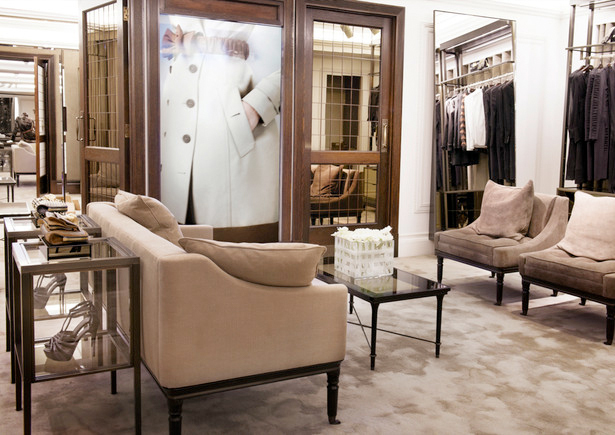
As on 26 April 2012 starts
Burberry with BURBERRY WORLD LIVE, Burberry worlds of British Heritage,
Fashion, Music and Weather to celebrate the opening of the Burberry Taiwan
flagship store at Taipei 101.
The online
community Burberry created as a digitally elevated audiovisual
shopping experience, connecting consumers with not only their products, but
integrating music and video as well to engage and entertain.”
Last
week on Thursday 28-09-12 Burberry opened a new flagship store on London's
Regent Street, packed with technological goodies and huge video walls that
magically interact with you when you walk up to them. One
of the biggest projects ever undertaken by the fashion house, the huge store on
Europe's premiere shopping street includes "immersive audiovisual
experiences" from nearly 500 speakers and 100 screens that "closely
engage customers through emotive brand content including disruptive digital
takeovers, such as rain showers synchronised across all screens and speakers at
selected moments throughout the day".

Surprising
new shopping trends and unexpected gender twists are pushing big name luxury
brands to new heights. A new breed of big spenders is out in full force, where
men shop like ladies and women spend like men. Beyond the role reversal there’s
a new group of shoppers with a spending habit that’s setting the luxury world
on fire.

In one of my earlier posts. In
my post I’ve written about multi sensory experience high end fashion stores. In
a world where the average person sees 3,000 advertisements a day, the only way
to stand out is by delivering a multi-sensory experience customers won’t
forget. Creating, engaging experiences by using music, video and digital
signage, messaging, scent, and audio/visual systems to personify and enhance
brands to create lasting connections that encourage customer loyalty.
Surprising
new shopping trends and unexpected gender twists are pushing big name luxury
brands to new heights. A new breed of big spenders is out in full force, where
men shop like ladies and women spend like men. Beyond the role reversal there’s
a new group of shoppers with a spending habit that’s setting the luxury world
on fire.
Subscribe to:
Posts (Atom)